
Unplanned dryer downtime is one of the fastest ways to disrupt high-volume laundry operations. When an industrial dryer stops mid-cycle, production schedules slip, labor costs rise, and linen backlogs grow. At the center of most failures are industrial dryer parts that operate under constant heat, vibration, and extended run hours.
In commercial laundry environments such as healthcare, hospitality, and institutional facilities, dryers rarely rest. This continuous workload places stress on critical components, making part-level reliability essential. Understanding which components fail most often helps maintenance teams reduce downtime and protect overall system performance.
How Dryer Component Failures Disrupt Commercial Laundry Operations
Dryers operate as the final stage of the laundry process. Any interruption halts downstream folding, staging, and distribution. Even short outages create workflow bottlenecks and force facilities to adjust staffing and production priorities.
Failures of worn or overlooked laundry equipment parts are among the most common causes of lost productivity in industrial laundry rooms.
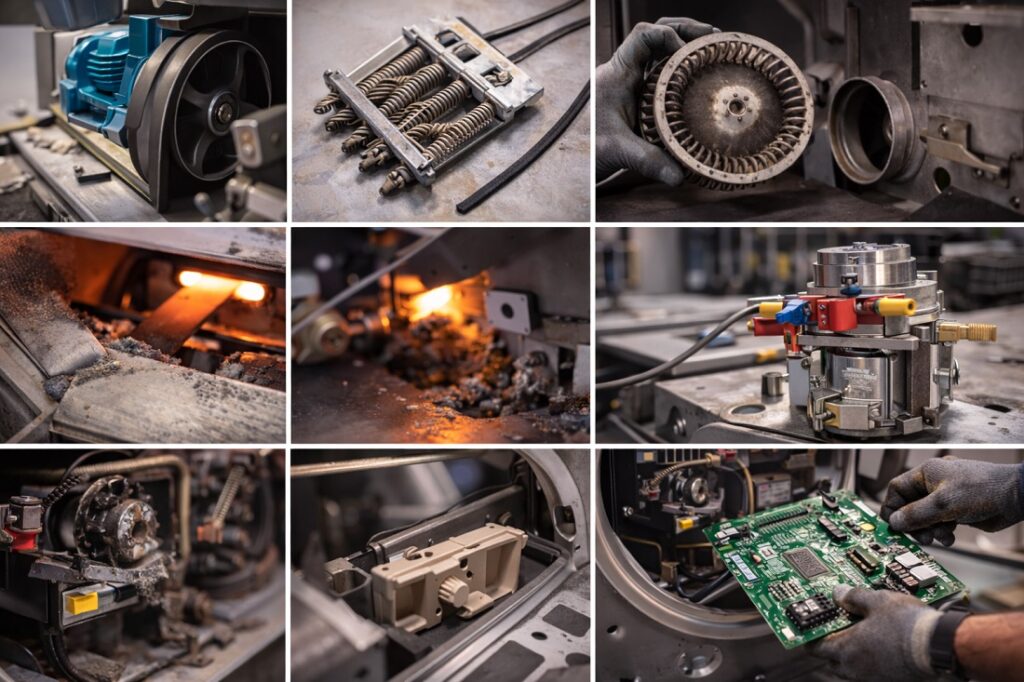
1. Drive Belts
Drive belts transfer power from the motor to the drum. Over time, heat exposure and mechanical strain cause belts to stretch, crack, or slip. A failed belt brings the entire dryer to a stop.
2. Blower Wheels and Fan Assemblies
Blower wheels maintain airflow through the drum. Lint buildup, imbalance, or bearing wear reduces airflow efficiency. This leads to longer dry times and overheating, which accelerate failures in other components.
3. Heating Elements or Burners
Heating systems operate under extreme thermal load. Electric elements can burn out, while gas burners may suffer from ignition or combustion issues. When heating fails, dryers run but cannot complete cycles.
4. Thermostats and Temperature Sensors
Temperature regulation depends on accurate sensors. Faulty thermostats may cause overheating shutdowns or inconsistent drying results. These failures often appear intermittently, making diagnosis difficult.
5. Lint Screens and Lint Ducting Components
Restricted airflow from clogged lint screens or damaged ducting places strain on motors and heating systems. Poor lint management remains one of the most preventable causes of dryer downtime.
6. Bearings and Drum Support Rollers
Bearings and rollers support the rotating drum. Continuous operation leads to wear, flat spots, or seizure. Early signs include noise and vibration, which often escalate into full mechanical failure if ignored.
7. Motor Assemblies
Motors power both drum rotation and airflow systems. Electrical stress, heat exposure, and bearing wear contribute to motor failure. Replacement often requires extended downtime due to labor and alignment requirements.
8. Door Switches and Safety Interlocks
Safety systems prevent operation when doors are open or when conditions are unsafe. Worn switches or misaligned interlocks may cause unexpected shutdowns even when the dryer appears operational.
9. Control Boards and Electronic Controllers
Control boards manage timing, temperature, and safety logic. Power fluctuations, heat exposure, or component aging can lead to erratic behavior or total system failure.
10. Gas Valves and Ignition Components (Gas Dryers)
Gas valves and ignition assemblies must operate precisely. Wear or contamination can prevent proper ignition, causing repeated shutdowns and incomplete cycles.
Why These Industrial Dryer Parts Fail More Frequently in Commercial Laundries
High-capacity industrial dryers operate for long hours with minimal recovery time. Heat cycling, vibration, and lint exposure accelerate wear. In many cases, minor component issues escalate due to delayed inspection or replacement.
How Downtime from Dryer Parts Failures Impacts Total Cost of Ownership
Unplanned repairs increase labor costs, emergency service fees, and energy waste. Production losses compound these expenses. Over time, repeated failures shorten equipment lifespan and raise operating costs across the facility.
Preventive Maintenance Strategies to Reduce Dryer-Related Downtime
Scheduled inspections, airflow cleaning, and part replacement based on usage hours help prevent breakdowns. Tracking wear patterns allows facilities to address failures before they stop production.
Choosing the Right Industrial Dryer Parts for Reliability and Longevity
Selecting high-quality commercial dryer parts built for industrial duty cycles reduces failure frequency. Proper fit, material quality, and compatibility play a direct role in long-term reliability.
Keeping Industrial Laundry Operations Running Without Interruption
Reducing downtime starts with understanding failure-prone components and sourcing dependable commercial laundry equipment parts. Consolidated Laundry Machinery supports industrial laundry operations with durable replacement solutions designed for demanding environments.
Contact Consolidated Laundry Machinery today to reduce downtime and protect operational performance.