
Selecting a powder coating provider often begins with pricing and turnaround time. For industrial buyers, however, surface appearance is only one part of the equation. Structural steel, heavy equipment components, architectural assemblies, and energy infrastructure demand long-term durability, not short-term coverage.
Coating performance is determined by preparation, compliance, inspection, and application control. Industrial procurement decisions that overlook these factors frequently lead to premature corrosion and rising maintenance costs. This is why organizations evaluating powder coating services must assess more than basic capability.
Surface Preparation Standards: The Foundation of Coating Performance
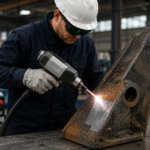
The durability of any coating system begins with substrate preparation. Abrasive blasting performed to SSPC standards removes rust, mill scale, oil residue, and embedded contaminants while creating a defined anchor profile.
Without controlled surface preparation, powder coatings bond superficially. Moisture penetration and underfilm corrosion often follow. Industrial buyers should confirm that blasting processes align with recognized cleanliness standards and include inspection checkpoints before coating application.
A facility that prioritizes preparation demonstrates commitment to measurable long-term performance.
Compliance With Industry Standards
Industrial applications frequently require adherence to ASTM specifications and, where applicable, UL certifications, CSA standards, and NEMA classifications. Architectural aluminum systems may require compliance with AAMA standards.
A provider that operates in accordance with defined industry standards incorporates documented procedures, quality control protocols, and traceable inspection processes.
Buyers should evaluate whether coating systems and application methods align with project specifications rather than relying solely on general performance claims.
Capability to Handle Large, Heavy, and Industrial-Scale Assets
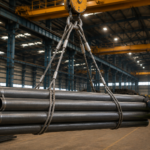
Industrial components vary significantly in size and complexity. Structural beams, heavy machinery frames, transformer housings, and long fabricated assemblies require facilities equipped with large blasting enclosures and curing ovens.
Basic operations designed for small parts may struggle to maintain consistent preparation and film thickness on oversized assets.
Evaluating equipment capacity, material-handling systems, and workflow controls ensures that large, heavy components receive uniform treatment throughout the blasting and curing stages.
Consistency in Film Thickness and Curing Control
Uniform film build directly influences corrosion resistance. Thin areas become vulnerability points, while excessive thickness may lead to cracking due to thermal expansion.
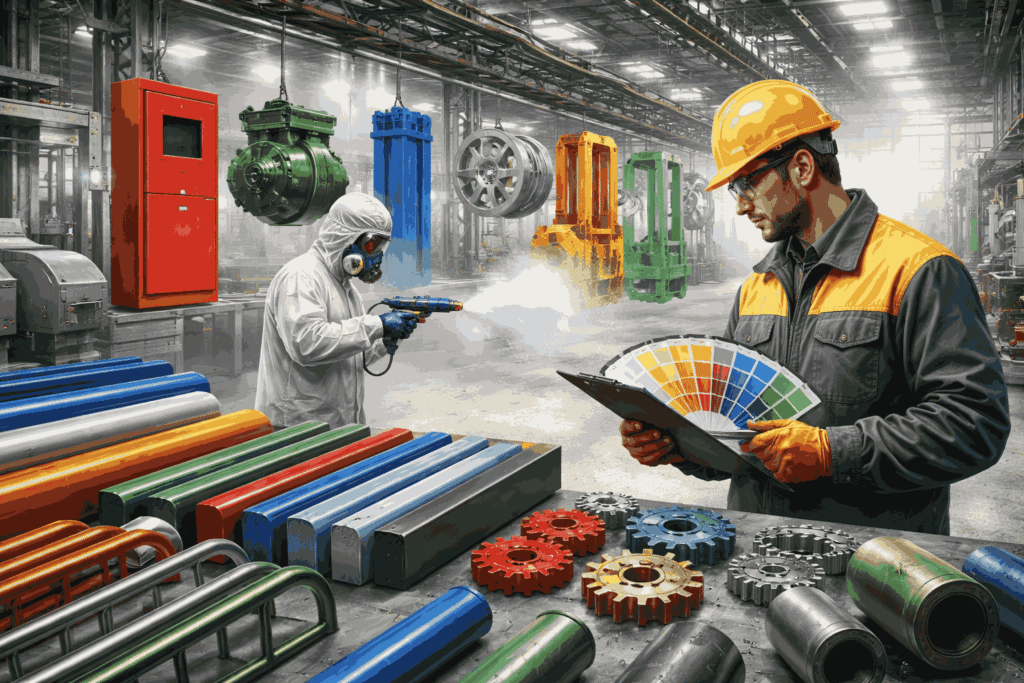
Electrostatic application improves coverage across edges and complex geometries, but consistency also depends on calibrated equipment and monitored curing cycles.
Industrial buyers should confirm that thickness measurements, curing verification, and inspection protocols are integrated into the coating process. Quality control extends beyond visual assessment and requires measurable data.
Corrosion Resistance in New Brunswick’s Coastal and Industrial Environments
New Brunswick’s proximity to the Atlantic creates persistent exposure to airborne chlorides, high humidity levels, and rapid seasonal shifts. Steel structures in ports, industrial parks, and coastal facilities are subjected to continuous environmental pressure that accelerates oxidation and underfilm corrosion. Protective systems must be engineered to manage these combined stressors rather than simply resist surface wear.
Powder systems formulated for corrosion resistance, when applied over properly prepared substrates, provide a durable barrier against moisture intrusion. Buyers should assess whether the provider has experience with coastal and industrial exposure conditions rather than focusing solely on standard interior applications.
Lifecycle Cost vs Initial Price
Low upfront pricing may appear attractive, but premature failure results in additional blasting, recoating, downtime, and operational disruption.
Lifecycle cost analysis considers durability, compliance, maintenance frequency, and long-term performance. Investing in standards-driven preparation and controlled application reduces recurring expenses and strengthens asset reliability.
Industrial buyers who search online for ‘powder coating services near me’ should prioritize performance and alignment with compliance requirements over convenience alone.
Industrial-Grade Evaluation Prevents Long-Term Failure
Industrial coating decisions influence structural integrity, maintenance budgets, and regulatory compliance. Evaluating preparation standards, facility capability, inspection protocols, and environmental performance prevents avoidable failure.
Professional Powder Coating delivers engineered systems grounded in SSPC-compliant blasting, controlled curing, and adherence to ASTM and applicable industry standards. Each project is executed with measurable quality control designed for long-term durability.
Organizations seeking dependable Powder coating services in New Brunswick can contact Professional Powder Coating to implement industrial-grade solutions that protect assets and reduce lifecycle risk.