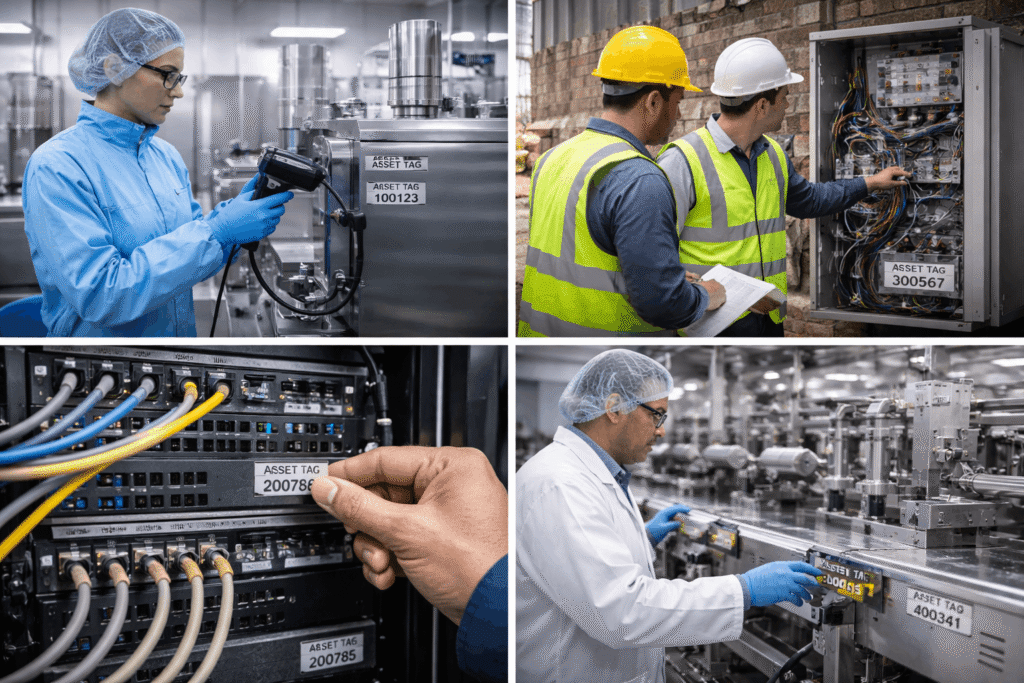

Industrial organizations across Canada operate under strict regulatory requirements that demand accurate identification and tracking of equipment, tools, and infrastructure. Compliance frameworks in sectors such as manufacturing, healthcare, transportation, and utilities require reliable systems that support traceability and documentation. Durable asset labels in Canada play a critical role in these processes by ensuring that equipment can be identified quickly and consistently throughout its lifecycle.
Clear identification supports maintenance schedules, inspection programs, and operational accountability. Without dependable labeling systems, organizations face difficulties maintaining accurate records and meeting regulatory expectations. Industrial-grade asset labels provide the durability and clarity required to maintain compliance while supporting efficient asset management.
1. Manufacturing and Industrial Production
Manufacturing facilities manage a wide range of machinery, production lines, and safety equipment. Each component requires accurate identification to support preventive maintenance programs and equipment inspections.
Asset identification systems help manufacturers:
- Track equipment maintenance history
- Identify production assets across multiple facilities
- Support safety compliance and operational audits
- Maintain accurate inventory control
Durable labels ensure that identification remains visible despite exposure to oils, chemicals, heat, and mechanical wear common in industrial environments.
2. Energy and Utilities
Energy and utility infrastructure relies on complex systems that include electrical panels, pipelines, substations, and monitoring equipment. These assets must be properly identified for safety inspections, regulatory reporting, and operational reliability.
Permanent identification helps organizations manage infrastructure by:
- Supporting inspection records and compliance documentation
- Identifying critical equipment during maintenance procedures
- Reducing the risk of operational errors
- Ensuring long-term traceability for infrastructure components
High-quality labeling solutions remain legible even in outdoor environments exposed to extreme temperatures, moisture, and environmental wear.
3. Healthcare and Medical Facilities
Healthcare environments depend on strict asset tracking protocols to ensure that medical equipment is maintained, inspected, and properly documented. Hospitals and diagnostic centers manage thousands of devices ranging from imaging systems to patient monitoring equipment.
Reliable identification helps healthcare facilities:
- Track service schedules and inspection dates
- Maintain regulatory compliance documentation
- Manage equipment inventories across departments
- Reduce the risk of equipment misidentification
Durable labeling solutions support infection control procedures and repeated cleaning processes commonly required in healthcare settings.
4. Government and Public Sector
Government agencies and public sector organizations manage extensive inventories of infrastructure assets, technology equipment, and operational tools. Effective identification systems help maintain accountability and support transparent asset management.
Asset labeling contributes to:
- Accurate inventory management across departments
- Tracking of infrastructure components and equipment
- Compliance with public sector documentation requirements
- Efficient asset lifecycle management
Permanent identification ensures that government organizations can maintain accurate asset records over extended periods.
5. Transportation and Logistics
Transportation networks and logistics operations rely on precise asset identification to manage vehicles, containers, cargo equipment, and warehouse infrastructure. Clear labeling systems support efficient movement of goods and equipment across supply chains.
Asset identification supports logistics operations by:
- Tracking fleet maintenance and service schedules
- Identifying containers, pallets, and storage equipment
- Improving warehouse inventory management
- Supporting regulatory documentation for transportation assets
Durable labels remain readable despite heavy handling, exposure to weather, and operational wear.
Why Durable Asset Labels Matter for Compliance
Compliance standards across industries require consistent identification that remains legible throughout the equipment lifecycle. Temporary labeling solutions often degrade under industrial conditions, creating risks for recordkeeping and safety documentation.
Industrial-grade asset labels offer several advantages:
- Long-term durability in harsh environments
- Clear identification for inspections and audits
- Improved traceability across asset management systems
- Reduced risk of misidentification during maintenance procedures
Reliable labeling supports both operational efficiency and regulatory accountability.
Supporting Compliance Through Reliable Asset Identification
Industrial sectors across Canada depend on accurate asset identification to maintain regulatory compliance and operational reliability. Durable labeling solutions support equipment traceability, inspection documentation, and long-term asset management.
Organizations that implement permanent identification systems benefit from improved asset visibility and stronger compliance practices. Identifab Industries Limited provides industrial labeling solutions designed for demanding environments and long-term equipment identification.
Businesses seeking reliable identification systems can contact Identifab Industries Limited to discuss durable labeling solutions and customized asset tags for industrial applications.