
Equipment failures rarely happen at convenient times. A worn conveyor guide, a cracked guard, or a distorted machined part can disrupt production, increase maintenance costs, and delay deliveries. In many cases, the issue stems from material selection. When strength is misunderstood or misapplied, even a well-designed component can underperform in industrial plastics.
Johnston Industrial Plastics Limited supplies materials and fabrication solutions that help Canadian businesses match material strength to real operating demands.
What “Strength” Means in Industrial Plastics
In industrial plastics, strength refers to how a material performs under stress, load, impact, temperature, and chemical exposure. It includes:
- Tensile Strength: Resistance to pulling forces
- Compressive Strength: Ability to withstand crushing loads
- Impact Resistance: Resistance to sudden shock
- Flexural Strength: Ability to bend without cracking
- Wear Resistance: Performance under friction and movement
A plastic component may be flexible yet strong. Another may be rigid but vulnerable to impact. Strength depends on the application environment.
How Industrial Plastics Compare to Traditional Materials
Industrial plastics often replace steel, aluminum, or bronze in industrial components. While metals offer high load capacity, engineered plastics provide advantages in specific conditions:
- Lower weight reduces strain on moving systems
- Corrosion resistance extends lifespan in wet or chemical settings
- Self-lubricating grades reduce friction
- Noise reduction improves operational environments
- Electrical insulation enhances safety
In many machining and fabrication projects, plastics provide sufficient mechanical strength while lowering maintenance demands.
Real-World Applications Where Strength Matters Most
Strength becomes critical in applications such as:
- Material Handling: Wear strips, guides, and rollers endure constant friction
- Mining and Aggregates: Liners and guards face heavy abrasion
- Food Processing: Components require load strength and sanitation compatibility
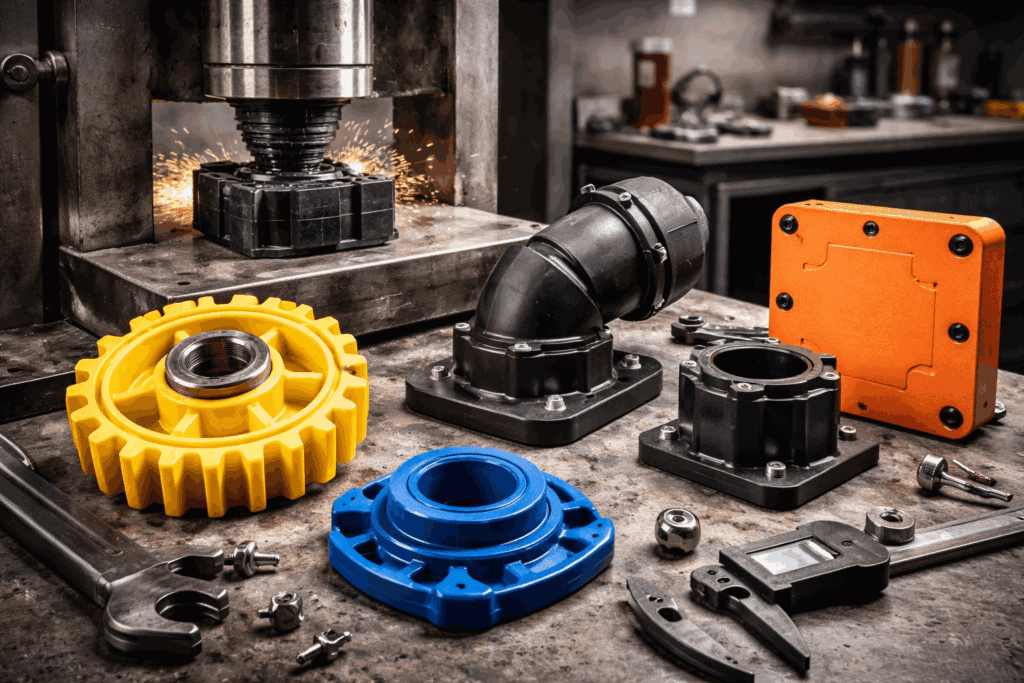
- Automated Manufacturing: Gears and bushings must maintain dimensional stability
- Electrical and Utility Systems: Insulating parts must resist impact and heat
In each case, selecting the right plastic determines service life and downtime frequency.
Material Examples from Johnston Industrial Plastics Limited’s Portfolio
Johnston Industrial Plastics Limited supplies a broad inventory of engineering plastics suited for Canadian industry, including:
- UHMW Polyethylene: High impact resistance and excellent wear properties
- Acetal: Strong, rigid, and dimensionally stable
- Nylon: Durable under repeated stress and mechanical load
- HDPE: Chemical resistance with moderate structural strength
- Polycarbonate: Exceptional impact resistance and clarity
- PEEK and Other High-Performance Plastics: High strength at elevated temperatures
Each material behaves differently under load, temperature, and moisture. Strength must align with real operating conditions.
Why Strength Must Be Evaluated in Context
Material data sheets provide tensile and compressive values. However, real-world factors influence results:
- Continuous versus intermittent load
- Temperature fluctuations
- Exposure to oils or chemicals
- UV exposure in outdoor settings
- Tolerance requirements in precision machining
For example, nylon offers strong mechanical properties but may absorb moisture in humid environments. Acetal provides better dimensional stability in such cases. Context determines suitability.
How Proper Fabrication Preserves Material Strength
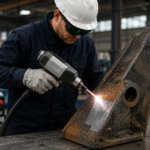
Industrial plastics in Montreal require different handling than metals. Incorrect cutting speeds, excessive heat, or poor clamping can weaken components. Proper plastic machining and fabrication processes help maintain structural integrity by:
- Controlling heat buildup during CNC machining
- Using appropriate tooling geometry
- Allowing for thermal expansion
- Avoiding internal stress concentration
Johnston Industrial Plastics Limited provides machining and fabrication services that account for these material-specific factors. This ensures that strength characteristics remain intact after processing.
Choosing the Right Industrial Plastic for Your Application
Strength in industrial plastics is not a single measurement. It reflects how a material performs under real conditions. Proper selection and fabrication support consistent performance across industrial environments.
When evaluating material strength, consider:
- Load type and frequency
- Operating temperature range
- Exposure to chemicals or moisture
- Required lifespan
- Compliance standards, if applicable
Matching these factors to material performance reduces premature wear and unexpected failure. A structured approach improves reliability and cost control.
Johnston Industrial Plastics Limited supports businesses with material supply and machining capabilities that align strength properties with application demands. Contact Johnston Industrial Plastics Limited today for more information on industrial plastics in Calgary.