
Wind data may appear simple, yet small inaccuracies can affect safety, performance, and reporting. In sectors such as construction, environmental monitoring, and renewable energy, wind speed readings influence planning and operational decisions.
Field accuracy depends on the measurement method and the device used. Selecting between a digital handheld anemometer and a mechanical anemometer plays a key role in achieving reliable results.
What Is a Digital Handheld Anemometer?
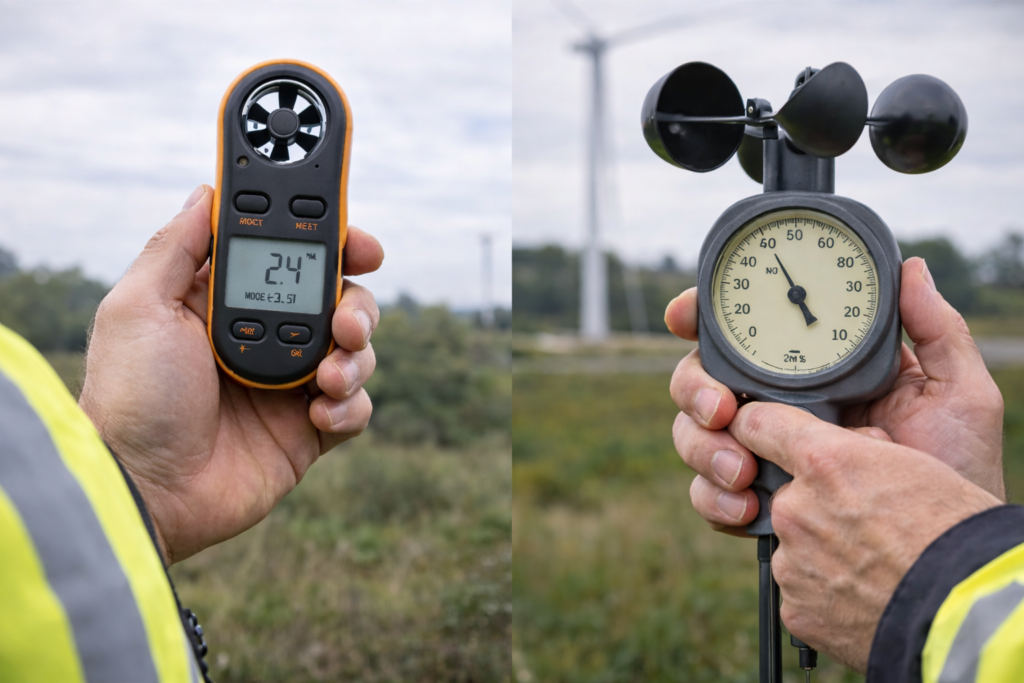
A digital handheld anemometer is a compact device designed for portable wind measurement. It uses electronic sensors to detect airflow and display readings instantly on a screen.
Key characteristics include:
- Lightweight and easy to carry
- Real-time digital display
- Ability to store or transmit data
- Often integrates with mobile or logging systems
These devices are commonly used for spot checks and quick field assessments.
What Is a Mechanical Anemometer?
A mechanical anemometer measures wind speed using moving components such as cups or propellers. As wind flows, these parts rotate, and the rotation speed is converted into wind speed readings.
Common features include:
- Durable construction for outdoor use
- Continuous measurement capability
- Simple operating mechanism
- Often used in fixed installations
Mechanical anemometers are widely used in long-term monitoring setups.
How Each Anemometer Measures Wind Speed
Digital handheld anemometers:
- Use electronic sensors or ultrasonic technology
- Capture airflow changes instantly
- Convert signals into digital readings
Mechanical anemometers:
- Rely on the rotational movement of cups or blades
- Measure wind speed based on rotation rate
- Translate mechanical motion into a readable output
Each method offers distinct advantages depending on field conditions and data requirements.
Side-by-Side Comparison: Digital vs Mechanical Anemometers
| Feature | Digital Handheld Anemometer | Mechanical Anemometer |
| Portability | High | Low to moderate |
| Data display | Instant digital readout | Requires conversion or external display |
| Maintenance | Minimal (fewer moving parts) | Requires periodic inspection |
| Accuracy in low wind | High sensitivity | May be less responsive |
| Long-term monitoring | Limited | Strong suitability |
| Durability in harsh conditions | Moderate | High |
This comparison highlights how application needs influence the choice of device.
When to Use a Digital Handheld Anemometer
Digital handheld wind meters are suitable in scenarios where mobility and quick readings matter.
Typical use cases include:
- Field inspections and audits
- Temporary measurements across multiple locations
- Indoor airflow assessments
- Situations requiring fast decision-making
Their ability to deliver immediate data supports efficient on-site evaluations.
When a Mechanical Anemometer Is More Suitable
Mechanical anemometers perform well in environments that require consistent and long-term monitoring.
Common applications include:
- Fixed weather stations
- Infrastructure and site monitoring
- Renewable energy installations
- Continuous environmental data collection
Their durability and stability make them reliable for extended use.
Choosing the Right Tool for Better Field Accuracy
Selecting the right anemometer depends on how and where measurements are taken. Portable devices support flexibility, while fixed systems support consistency. Accuracy improves when the tool aligns with the operational need.
Environmental conditions, measurement duration, and data requirements should guide the decision.
Contact Comptus for weather flow wind meters designed for dependable, efficient wind measurement in field applications.