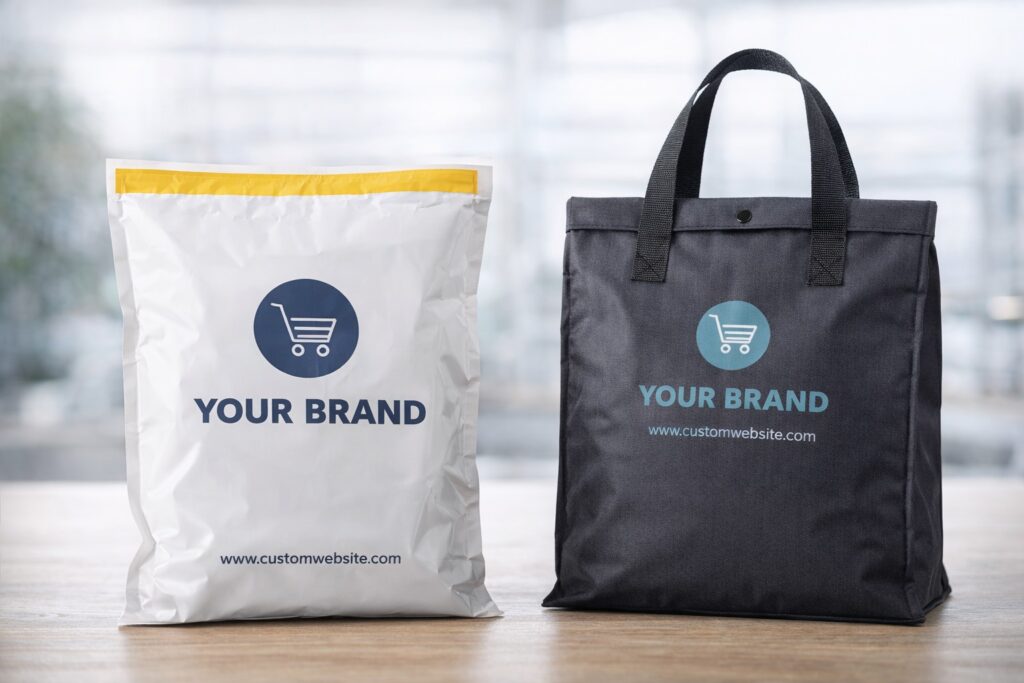

E-commerce businesses often struggle with packaging decisions that balance cost, sustainability, and customer expectations. Selecting an unsuitable shipping bag can increase costs, risk damaging the product, and affect brand perception. Environmental concerns now influence purchasing decisions, making packaging choices a long-term consideration.
Selecting between single-use and reusable custom shipping bags requires a clear evaluation of functionality, cost, and environmental impact. The right packaging approach supports efficient shipping while aligning with evolving business and consumer priorities.
What Are Single-Use Custom Shipping Bags in E-commerce?
Single-use custom shipping bags are designed for one-time delivery. These are commonly made from polyethylene and are widely used across e-commerce operations.
They offer:
- Lightweight construction for reduced shipping costs
- Tamper-evident sealing for secure delivery
- Custom printing for branding and order identification
These bags are often used for apparel, soft goods, and non-fragile items. Many modern options also include recyclable materials, which help address environmental concerns.
What Are Reusable Custom Shipping Bags?
Reusable custom shipping bags are built for multiple uses. They are typically made with stronger materials and feature resealable closures.
Common features include:
- Durable construction for repeated handling
- Dual adhesive strips or zipper closures
- Return-friendly design for reverse logistics
These packaging solutions support circular systems and are often used by businesses that offer returns or operate subscription-based shipping models.
Single-Use vs Reusable Shipping Bags: Side-by-Side Comparison
Understanding the differences between these options helps clarify their practical applications.
| Feature | Single-Use Bags | Reusable Bags |
| Usage | One-time shipment | Multiple shipments |
| Material | Lightweight polyethylene | Thicker, reinforced materials |
| Cost per unit | Lower upfront cost | Higher upfront cost |
| Durability | Moderate | High |
| Environmental impact | Depends on recyclability | Reduced waste over time |
| Return suitability | Limited | Designed for returns |
Each option serves a different operational purpose depending on shipping frequency, product type, and return policies.
Cost Considerations: Upfront vs Long-Term Value
Cost plays a central role in packaging decisions.
Single-use shipping bags offer lower upfront costs. This makes them suitable for businesses with high shipping volumes and tight cost controls. However, repeated purchases can increase long-term expenses.
Reusable bags require a higher initial investment. Over time, they can reduce the need for frequent replacements, especially in return-heavy operations. This creates potential cost savings when managed efficiently.
Balancing upfront cost with long-term value is essential when selecting a customized shipping bag.
When Single-Use Shipping Bags Make More Sense
One-time-use packaging is often the practical choice in specific scenarios.
They are suitable when:
- Shipping volumes are high, and cost control is critical
- Products are lightweight and non-fragile
- Returns are minimal or infrequent
- Fast packing and fulfillment are required
These bags support efficient operations in high-volume shipping environments.
When Reusable Shipping Bags Are More Suitable
Reusable bags provide advantages in different operational models.
They are effective when:
- Return rates are high
- Subscription-based shipping is involved
- Sustainability goals are a priority
- Packaging durability is required for multiple handling cycles
These bags support reduced waste and can improve packaging consistency across multiple shipments.
How to Make the Right Choice for Your Business
Packaging decisions influence operational cost, fulfillment efficiency, and sustainability targets. Selecting the right type of shipping bag helps maintain operational consistency while supporting long-term goals.
Choosing between single-use and reusable custom shipping bags depends on operational priorities. Factors such as shipping volume, return frequency, product type, and sustainability goals all influence the decision.
A balanced approach may also be effective. Some businesses use single-use bags for outbound shipments and reusable options for returns. This hybrid strategy supports cost efficiency while addressing environmental considerations.
Businesses evaluating custom shipping bags can contact PolyPak Packaging for printed mailing bags that support a range of e-commerce shipping requirements.