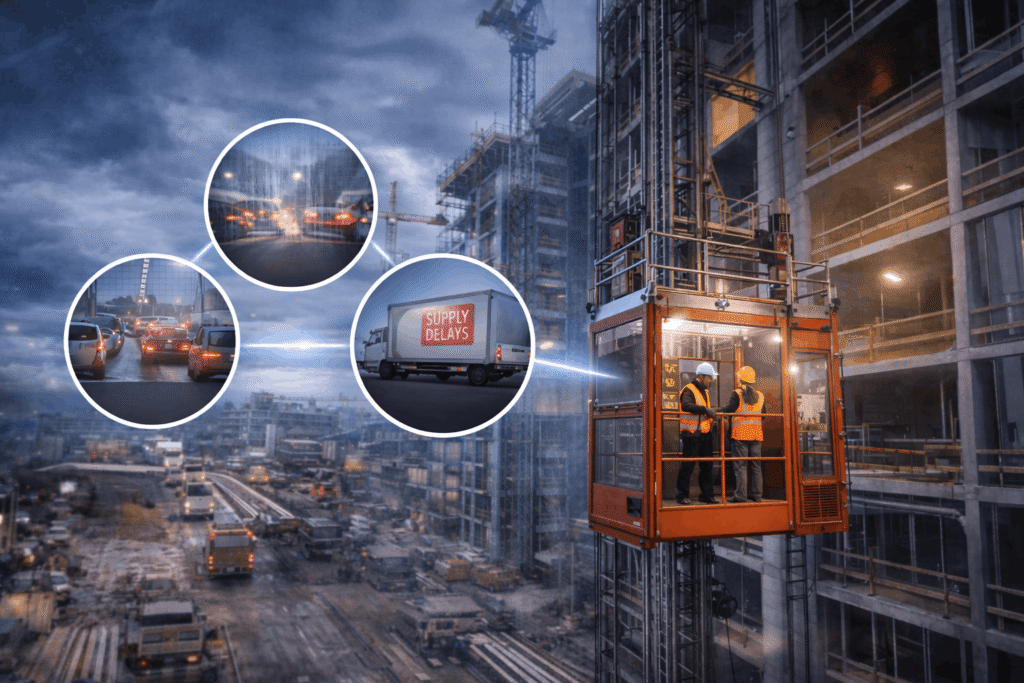

Vertical transport is a critical dependency on active construction sites. When materials or crews cannot move reliably between levels, progress slows across every trade. Delays often compound quickly, turning minor access issues into missed milestones and extended schedules. These disruptions are especially costly on high-rise and multi-phase projects throughout Canada and the USA.
At the center of this challenge is the buck hoist, a dedicated vertical transport system designed to efficiently move people and materials. When properly specified and deployed, it becomes a primary solution for eliminating transport-related downtime and restoring predictable site flow.
The Most Common Causes of Transport Delays on Construction Sites
Transport delays typically stem from congestion, limited lift availability, and inconsistent equipment performance. Shared lifting resources create queues. Temporary access solutions struggle to keep up with daily demand. Maintenance interruptions halt movement without warning.
These issues intensify as projects scale. Without dedicated construction hoists, sites rely on stopgap measures that cannot sustain high-frequency transport cycles. The result is idle labor, material backlogs, and fragmented scheduling.
How a Buck Hoist Solves These Transport Challenges
A buck hoist addresses delay at the source by providing a consistent, dedicated vertical pathway. Unlike shared lifting systems, it operates on a fixed route with predictable cycle times. This separation removes competition for access and stabilizes daily operations.
By handling routine transport independently, the buck hoist allows cranes and other equipment to focus on specialized lifts. This division of labor reduces bottlenecks and improves overall efficiency.
Key Features of Buck Hoists That Enhance Transport Efficiency
Efficiency is built into the design. Rigid mast systems, guided cars, and controlled acceleration ensure smooth, repeatable movement. High-capacity platforms support frequent trips without compromising stability.
These characteristics distinguish construction hoists from improvised solutions. Consistent stops, reliable braking, and rated capacities support uninterrupted transport throughout the workday.
Real-World Scenarios Where Buck Hoists Prevent Project Delays
Facade installation, interior build-outs, and mechanical fit-outs all require constant vertical access. When materials arrive late at upper levels, downstream tasks stall. A buck hoist maintains continuous flow during these phases.
On dense urban sites, space constraints limit staging options. Dedicated construction elevator systems reduce ground-level congestion by moving materials vertically as needed rather than stockpiling at grade.
How UCEL Buck Hoists Deliver Reliable Vertical Transport
UCEL Inc. designs buck hoist systems engineered for demanding construction environments. Structural integrity, load control, and predictable performance are prioritized to support daily high-cycle use.
UCEL solutions integrate seamlessly into site logistics plans, ensuring construction hoists remain dependable even during peak activity periods. This reliability translates directly into fewer delays and stronger schedule control.
Buck Hoists Provide the Speed, Safety, and Consistency Needed to Eliminate Transport Delays
Transport delays are rarely isolated events. They ripple through schedules, labor planning, and budgets. A properly specified buck hoist removes uncertainty by delivering consistent vertical access for people and materials. For projects across Canada and the USA, UCEL Inc.’s construction elevator systems provide the reliability needed to maintain momentum and protect timelines.
Contact us today to implement a buck hoist solution that keeps vertical transport moving without interruption.