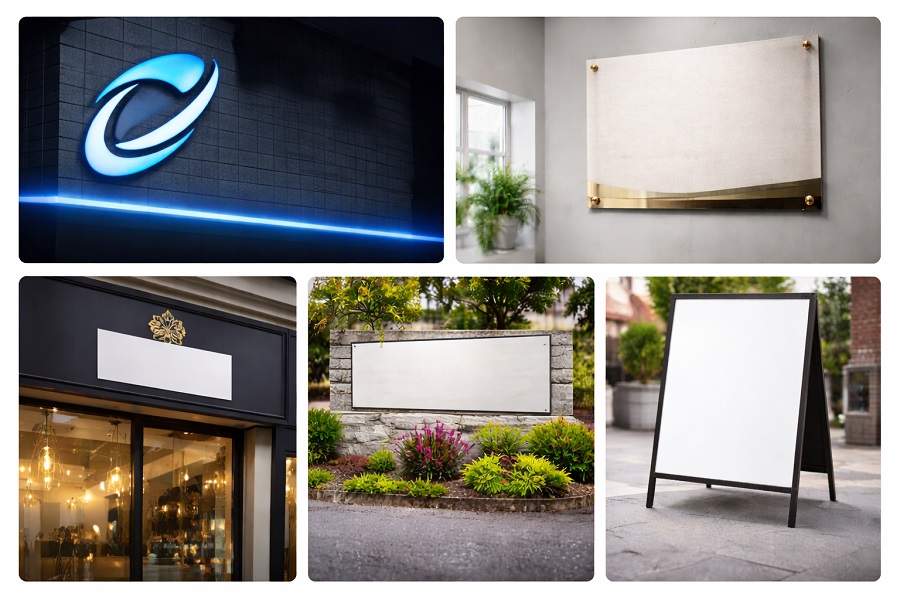

Many Canadian businesses invest in signage without fully understanding what makes a sign effective. The result is often a sign that exists, but does not communicate clearly, attract attention, or withstand local conditions. Weak sign design can reduce visibility, confuse customers, and weaken brand recognition over time. Strong business sign design addresses these risks by balancing clarity, material performance, and long-term durability. This is where well-planned plastic machining and fabrication play a central role.
Canadian business signs must withstand varied climates, comply with local expectations, and remain legible under changing lighting and weather conditions. Understanding what defines a strong business sign helps businesses make informed decisions that support visibility, professionalism, and consistency.
Understanding the Purpose of a Business Sign
Every effective business sign begins with a clear purpose. A sign must communicate essential information quickly and without confusion. In most cases, that purpose includes identification, wayfinding, or reinforcing brand presence.
A business sign may serve one or more of the following roles:
- Identify a business location from the street
- Direct visitors to entrances, parking, or service areas
- Reinforce brand recognition and credibility
- Support compliance with municipal or property guidelines
When the purpose is unclear, design decisions become fragmented. Text becomes crowded. Graphics compete for attention. Materials may not match the environment. Defining the role of the sign early helps guide layout, size, material choice, and fabrication methods.
Readability and Visibility at a Distance
Visibility determines whether a business sign performs its basic function. In Canadian urban and suburban settings, signs often compete with traffic, neighbouring businesses, and seasonal lighting conditions.
Strong readability depends on several factors working together:
- Letter height that matches viewing distance
- High contrast between text and background
- Clean typefaces without excessive styling
- Adequate spacing between letters and lines
Plastic-fabricated signs support these requirements by allowing precise machining of letters and panels. Acrylic, polycarbonate, and PVC substrates provide smooth surfaces that maintain contrast and clarity over time.
Visibility also extends beyond daytime conditions. Winter glare, snow buildup, and shorter daylight hours increase the importance of thoughtful colour contrast and surface finish. Matte or lightly textured finishes can reduce reflection without sacrificing legibility.
Material Selection for Canadian Conditions
Canadian weather poses unique challenges for business signage. Temperature swings, UV exposure, moisture, and freeze-thaw cycles all affect performance.
Material selection plays a critical role in durability and appearance:
- Acrylic offers clarity, colour stability, and clean edges for professional signage
- Polycarbonate provides impact resistance for high-traffic or exposed areas
- PVC and expanded PVC support lightweight, cost-effective applications
- HDPE and other engineering plastics handle moisture and temperature stress
Plastic machining and fabrication allow these materials to be cut, routed, and formed to precise specifications. This consistency helps signs maintain shape, alignment, and finish over time.
Selecting materials based on climate and installation location reduces cracking, warping, and premature replacement. It also supports predictable maintenance schedules, which matters for businesses managing multiple locations across Canada.
Consistency With Brand Identity
A business or casino sign represents more than a name. It reflects brand values, professionalism, and reliability. Consistency in colour, typography, and proportions strengthens recognition and trust.
Strong sign design aligns with existing brand elements:
- Logo placement that matches corporate standards
- Colours that remain accurate across lighting conditions
- Typeface choices consistent with marketing materials
- Proportions that feel balanced rather than compressed
Plastic fabrication supports this consistency by enabling repeatable production. Machined panels, dimensional letters, and layered designs maintain uniformity across multiple signs or locations.
When signs drift from brand standards, recognition weakens. Customers may question whether they have reached the correct location. Consistent design eliminates that uncertainty.
Design Simplicity and Information Hierarchy
Effective business signs communicate without excess. Simplicity does not mean minimal information. It means presenting information in the correct order.
A clear hierarchy typically includes:
- Business name or logo
- Core descriptor or service, if required
- Supporting details, such as unit numbers or hours
Overloading a sign with phone numbers, slogans, and secondary messages reduces impact. Viewers process signs quickly, often while moving. Simple layouts support faster comprehension.
Plastic machining enables clean separation between elements. Raised lettering, recessed panels, and layered materials help guide the eye naturally from primary to secondary information without visual clutter.
Installation Environment and Context
A sign does not exist in isolation. Surrounding architecture, lighting, and sightlines influence its performance.
Key environmental considerations include:
- Mounting surface material and colour
- Distance from pedestrian and vehicle traffic
- Exposure to wind, moisture, or vibration
- Interior versus exterior placement
Custom plastic fabrication allows signs to adapt to these conditions. Brackets, standoffs, and backing panels can be machined to match specific installation requirements. This flexibility improves both the appearance and mounting stability of the sign. Context-aware design ensures the sign complements the building rather than competing with it.
Evaluating Effectiveness Over Time
A strong business sign continues to perform after installation. Regular evaluation helps confirm whether the design remains effective as conditions change.
Indicators of long-term effectiveness include:
- Continued readability despite weather exposure
- Stable colour and surface finish
- Secure mounting without visible warping
- Consistent alignment with updated branding
Plastic signage materials support long service life when properly selected and fabricated. When updates become necessary, modular designs allow partial replacement without removing the entire sign.
Evaluating the performance of these business or casino supplies over time helps protect investment and plan future updates with confidence.
Bringing Business Sign Design Together With Long-Term Performance
Strong business and commercial signage design in the Canadian market depends on clarity, material performance, and thoughtful fabrication. Signs must communicate purpose quickly, remain legible in varied conditions, and align with brand identity without excess complexity. Plastic machining and fabrication make this possible by supporting precision, consistency, and durability.