
A burst pipe rarely starts as a small inconvenience. Water can spread quickly through walls, floors, and ceilings, creating expensive structural damage within hours. Extreme Canadian weather further increases the risk, especially in older homes and poorly insulated spaces.
Delayed action, unsafe thawing attempts, and incomplete repairs often turn manageable plumbing problems into major restoration projects. Understanding the most common mistakes during burst pipe repair can help reduce damage, improve safety, and support faster recovery after a plumbing emergency.
1. Delaying the Main Valve Shutoff Before Burst Pipe Repair
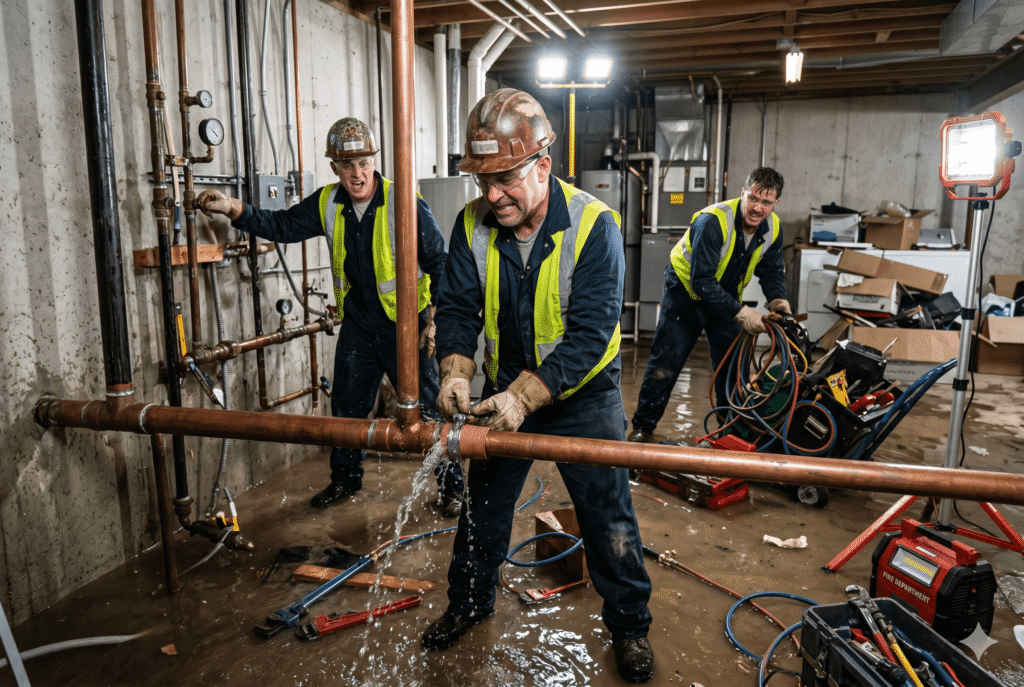
One of the biggest mistakes during burst pipe repair is failing to shut off the main water supply immediately.
Even a small pipe crack can release a large amount of water in a short time. Continuous water flow increases the risk of:
- Drywall deterioration
- Flooring damage
- Electrical hazards
- Mould growth
- Structural weakening
Many homeowners spend valuable time searching for the damaged section while water continues spreading through the property. A faster response begins with locating and shutting off the main valve first.
Why Quick Shutoff Matters
- Reduces water exposure inside walls and flooring
- Limits restoration costs
- Helps plumbers inspect the damaged area safely
- Prevents additional pressure buildup within frozen sections
Homes across the GTA often experience frozen plumbing issues during sudden temperature drops. Fast shutoff procedures are especially important during winter emergencies.
2. Using Unsafe Thawing Methods Instead of a Frozen Pipes Fix
Improper thawing methods pose serious safety risks during a frozen-pipe fix.
Open flames, propane torches, and uncontrolled heat sources are sometimes used to thaw frozen pipes quickly. These methods increase the risk of:
- Pipe cracking
- Fire hazards
- Heat damage to surrounding materials
- Sudden pipe bursts from uneven pressure changes
Frozen pipes require controlled thawing methods that gradually restore water flow without stressing the plumbing system.
Safer Approaches for Frozen Plumbing
Professional frozen pipe repairs typically involve:
- Controlled warm-air circulation
- Pipe-safe heating equipment
- Inspection of vulnerable pipe sections
- Pressure checks after thawing
Canadian winters place heavy strain on exposed plumbing near basements, garages, crawl spaces, and exterior-facing walls. Proper insulation and early intervention help reduce repeat freezing problems.
3. Ignoring Material Differences During Burst Pipe Repair
Not all plumbing materials react the same way after freezing.
A common issue during burst pipe repair is assuming every damaged pipe requires the same repair process. Older Canadian homes may contain:
- Copper piping
- PEX piping
- Galvanized steel pipes
- Mixed plumbing systems from previous renovations
Each material responds differently to freezing temperatures and pressure buildup.
Why Material Identification Matters
Incorrect repair methods can lead to:
- Weak pipe connections
- Recurring leaks
- Corrosion issues
- Reduced pipe lifespan
Accurate inspection helps determine whether pipe replacement or sectional repair is the safer long-term option.
4. Failing to Unplug Appliances Before Emergency Plumbing Assessment
Electrical safety is often overlooked during emergency plumbing situations.
Water from burst pipes can spread beneath appliances and into electrical areas without being immediately visible. Before beginning any emergency plumbing assessment, affected appliances should be disconnected safely where possible.
Common Areas of Concern
- Laundry rooms
- Water heater connections
- Basement utility spaces
- Kitchen plumbing areas
- Sump pump systems
Ignoring electrical exposure can create:
- Shock risks
- Appliance damage
- Circuit failures
- Additional safety hazards during repairs
Professional plumbing inspections often include identifying hidden moisture zones that may affect nearby electrical systems.
Additional Emergency Steps
During plumbing emergencies:
- Avoid standing water near outlets
- Keep electrical devices away from wet surfaces
- Document visible damage for insurance purposes
- Monitor ceilings and drywall for trapped moisture
5. Skipping Professional Burst Pipe Repair and Coordinated Moisture Removal
Many property owners focus only on stopping the leak while overlooking hidden moisture damage.
Burst pipe repair should include both plumbing restoration and moisture management. Water trapped behind walls or beneath flooring can create long-term problems even after the pipe is repaired.
Risks of Incomplete Cleanup
- Mould development
- Wood rot
- Persistent odours
- Damaged insulation
- Future structural repairs
Coordinated repair and drying processes help reduce secondary property damage after plumbing emergencies.
Why Professional Assessment Helps
Burst pipes can escalate quickly when handled improperly. Delayed shutoffs, unsafe thawing attempts, and incomplete repairs often increase property damage and recovery costs. Careful emergency response, proper inspection, and coordinated moisture removal all play an important role in reducing long-term plumbing issues.
Professional inspections can identify:
- Hidden leaks
- Weak pipe sections
- Moisture pockets
- Drainage concerns
- Freeze-prone plumbing locations
J.A. Plumbing Inc. continues to support homeowners across the Greater Toronto Area with residential plumbing services.
Contact J.A. Plumbing Inc. for reliable frozen water pipe repairs and emergency plumbing support in the Greater Toronto Area.